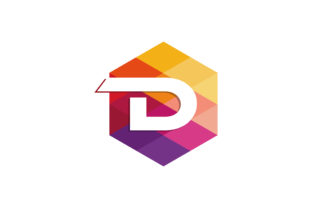
D Letter Colorful Hexagon Logo: Creative Branding Tool
When you first see a D Letter Colorful Hexagon Logo, it might look like a simple arrangement of shapes and color. In practice, this design approach combines geometric structure with typographic identity, offering a visual shorthand that communicates both professionalism and creativity. Whether you are launching a startup, refreshing an existing brand, or developing visual content for a personal project, understanding how this style works and why it resonates can help you make more intentional design decisions.
Why the hexagon shape matters for logo design
The hexagon is one of the most structurally efficient shapes in nature. It appears in honeycombs, crystal formations, and even in molecular structures. From a design perspective, the hexagon offers a balance between softness and rigidity. It is neither as severe as a square nor as fluid as a circle. This makes it particularly useful for logos that need to feel modern and stable without appearing aggressive or overly cold.
When you place the letter D inside a hexagon, you create a focal point that draws the eye toward the typography while the surrounding shape anchors the overall composition. The result is a mark that feels complete and self-contained, which is helpful for applications like social media avatars, app icons, or small-scale print materials where clarity is paramount.
Color as a communication layer
The colorful aspect of a D Letter Colorful Hexagon Logo is not just decorative. Color carries psychological weight and can influence how an audience perceives a brand. A vibrant gradient or a multicolor palette inside the hexagon can suggest innovation, energy, or approachability. For instance, a tech freelancer might use cool blues and purples to convey precision and calm, while a creative educator could opt for warm oranges and yellows to signal enthusiasm and accessibility.
The hexagon shape also provides natural segmentation. Some designers use this to split the hexagon into multiple colored sections, each representing a different aspect of the business or personality. This technique can make the logo more memorable and give it a layered meaning that goes beyond the letterform alone.
Who benefits most from this logo style
While any professional could use a D Letter Colorful Hexagon Logo, certain groups tend to find it especially useful.
- Entrepreneurs and small business owners who need a logo that works across digital and print without requiring constant redesign. The geometric nature of the hexagon scales well, and the letter D keeps the mark personal without relying on generic icons.
- Freelancers and independent creators who want to build a recognizable personal brand. A hexagon logo with your initial can serve as a signature across portfolios, invoices, and social profiles.
- Marketers and bloggers who need a visual identifier that stands out in crowded feeds. The colorful hexagon catches attention even at small sizes, which helps with recognition in timelines and sidebars.
- Educators and coaches who teach design or branding and want a practical example of how geometry and typography can work together. This style offers a clear case study in visual hierarchy and color theory.
Practical benefits in real-world use
One of the strongest arguments for a D Letter Colorful Hexagon Logo is its versatility across different media. Consider how the same mark performs on a business card, a website header, and a video intro. The hexagon provides a contained shape that can be filled with color, outlined, or even animated. The letter D remains legible and consistent, which reduces the need for multiple versions of the logo.
For professionals who manage their own branding, this means less time spent adjusting layouts and more time focusing on content or client work. You do not need a full design team to make this style work. Many template-based design tools and logo generators support hexagon shapes and color customization, allowing you to experiment with palettes and gradients without starting from scratch.
Supporting creativity without overwhelming the viewer
A common challenge in logo design is balancing originality with clarity. A logo that is too complex can confuse the audience, while one that is too simple may feel generic. The D Letter Colorful Hexagon Logo sits in a productive middle ground. The hexagon adds structure, the color adds personality, and the letter D adds personal relevance. This combination gives you room to be creative—by choosing unusual color combinations or playing with transparency—without losing the core identity.
For example, a wedding photographer using this style might select pastel tones and a thin outline to reflect elegance, while a fitness coach might choose neon gradients and a bold fill to convey intensity. The underlying structure stays the same, but the message changes completely based on color choices.
When to consider alternatives
No single logo style works for every situation. A D Letter Colorful Hexagon Logo may not be the ideal fit if your brand relies heavily on narrative imagery, such as a detailed illustration or a photographic element. Similarly, if you work in a highly formal industry where traditional crests or serif wordmarks are expected, a colorful geometric logo might feel out of place.
It is also worth considering that the letter D limits the logo to those whose name or brand starts with that letter. If you serve multiple brands or plan to rebrand under a different name later, a more abstract symbol might offer longer usability. Additionally, hexagon-based logos have become popular in recent years, so it is worth checking that your specific execution avoids looking too similar to existing marks in your field.
How to evaluate a D Letter Colorful Hexagon Logo for your needs
Before committing to this style, test it across the contexts where you will use it most. Place the logo on a dark background, on a light background, in a single color, and at a very small size. Ask yourself whether the letter D remains readable and whether the hexagon still feels balanced. If the colors bleed together or the shape distorts, you may need to simplify the palette or increase the contrast.
For those working with a designer, share examples of hexagon logos that you find effective and discuss what specifically appeals to you about the color treatment. For those using DIY tools, start with a limited palette of two or three colors and focus on contrast before adding gradients. A clean, high-contrast version often performs better in real-world settings than a complex one.
Long-term brand consistency
A D Letter Colorful Hexagon Logo can serve as a foundation for a broader visual system. The hexagon geometry can be extended to patterns, icons, and layout elements across your website or marketing materials. The color palette can inform your typography choices, button styles, and even photography treatments. This kind of consistency builds recognition over time and makes your brand feel intentional rather than accidental.
For professionals who produce content regularly—like bloggers, YouTubers, or course creators—this consistency is particularly valuable. Your audience learns to associate the hexagon and color scheme with your content, which can increase trust and engagement. Even a subtle use of the hexagon as a watermark or lower-third graphic can reinforce your presence without being intrusive.
Final thoughts on choosing this logo direction
A D Letter Colorful Hexagon Logo is a practical, visually appealing choice for many professionals and creators. It combines structure with expression, works across multiple formats, and allows for personalization through color. At the same time, it demands careful attention to contrast, scalability, and fit within your specific industry. When used thoughtfully, it can become a reliable part of your visual identity that supports your goals without requiring constant revision.
If you are exploring logo options, test this style with a few color variations and see how it feels in your everyday materials. The right logo should not only look good in a mockup but also hold up in the moments that matter most—on a client proposal, a social media post, or a business card handed out at a networking event.