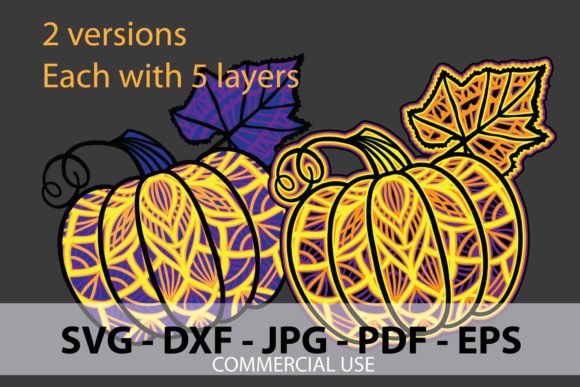
Pumpkin 3D Papercut Design: A Layered Approach to Autumn Craftsmanship
There is something deeply satisfying about transforming a flat sheet of paper into a sculptural object that seems to breathe with dimension. When the theme turns to autumn, few motifs capture the season quite like the humble pumpkin. But a Pumpkin 3D Papercut Design takes that familiar shape and elevates it into an intricate, layered artwork that demands a second look. Whether you are a seasoned crafter, a design professional seeking fresh decor ideas, or a business owner looking for unique seasonal products, this technique offers a rich intersection of tradition and innovation. Let me walk you through what makes this craft so compelling, how it works in practice, and what you need to consider before diving in.
What Exactly Is a Pumpkin 3D Papercut Design?
At its core, a Pumpkin 3D Papercut Design is a papercraft technique where multiple layers of cut paper are stacked and spaced to create a three-dimensional representation of a pumpkin. Unlike a flat silhouette or a simple decoupage, this method uses depth, shadow, and careful alignment to produce a realistic or stylized volumetric effect. Each layer subtracts or adds visual weight, and when backlit or displayed against a contrasting background, the result can be strikingly lifelike.
The process typically involves these elements:
- Layer planning: Each layer of the pumpkin—from the back rind to the front ridges—is designed separately, often in a vector graphics program, before cutting.
- Precision cutting: Using either a craft knife by hand or a cutting machine like a Cricut or Silhouette, each paper layer is cut with care. Intricate details, such as the stem's texture or the subtle curves of the pumpkin segments, require steady hands or well-calibrated settings.
- Spacing and assembly: Foam adhesive dots, accordion-folded paper strips, or small corrugated spacers are placed between layers to create physical depth. The spacing can range from a few millimetres to a centimetre or more, depending on the desired dimensionality.
- Finishing touches: Some designs incorporate a backing frame, a shadow box, or even a light source behind the outermost layer to enhance the interplay of light and shadow.
The beauty of a Pumpkin 3D Papercut Design lies in its versatility: it can be rustic and earthy with kraft paper and brown tones, or vibrant and modern with orange gradients, gold foil accents, and even mixed-media additions like dried leaves or twine.
Why Layered Papercut Designs Stand Out This Season
In a world saturated with digital imagery and mass-produced decorations, handmade papercut art carries a tactile authenticity that resonates deeply. A Pumpkin 3D Papercut Design is not just a decoration—it is an experience. The viewer can see the shadow cast by each layer, notice the slight variation in paper texture, and appreciate the skill required to align everything perfectly. That human element is something that machine-stamped or printed decor rarely achieves.
Moreover, this design approach scales beautifully. You can create a small desktop ornament for personal enjoyment, a full-sized shadow box for a living room wall, or even a series of pumpkins in different sizes for a retail display. The same core technique adapts to any scale, which is why both hobbyists and commercial creators find value in mastering it.
For businesses, offering a Pumpkin 3D Papercut Design as a limited-edition product or workshop can tap into the growing demand for mindful, handmade goods. Consumers today are willing to pay a premium for items that tell a story and require genuine skill—especially when those items align with seasonal traditions like autumn harvest celebrations, Halloween, or Thanksgiving.
The Purpose Behind the Layers
Every layer in a Pumpkin 3D Papercut Design serves a purpose. The backmost layer often establishes the overall silhouette and provides a solid foundation. Middle layers add the characteristic ridges and curves that give a pumpkin its recognizable form. The frontmost layer might include the stem, a leaf, or even a cutout window revealing a glow effect. By controlling the distance between layers, you control how much shadow is cast, which directly influences the perceived depth. This is where the craft becomes as much about engineering as it is about art.
Who Benefits from Pumpkin 3D Papercut Projects?
Perhaps you are wondering whether this craft is right for you. The answer depends on your goals, but the range of potential users is surprisingly broad.
- Home crafters and hobbyists: If you already enjoy papercraft, card making, or scrapbooking, adding a Pumpkin 3D Papercut Design to your repertoire is a natural progression. The materials are affordable, and the satisfaction of seeing a finished piece is immense. Many crafters find the process meditative and rewarding, especially when creating gifts for friends and family.
- Design professionals and artists: For graphic designers, illustrators, and visual artists, papercut design offers a tangible way to translate digital concepts into physical form. It can be a refreshing break from screen-based work and a portfolio piece that demonstrates versatility. Some designers use layered papercut techniques to prototype packaging, window displays, or even set designs.
- Small business owners and makers: If you run an Etsy shop, a local gift store, or a seasonal pop-up, original papercut art can differentiate your offerings. A well-crafted Pumpkin 3D Papercut Design in a shadow box can command a higher price point than generic decor, and custom orders for personalized pumpkins (with family names or specific colour schemes) can become a recurring revenue stream.
- Educators and workshop facilitators: Teaching a class on how to create a Pumpkin 3D Papercut Design is a fantastic way to engage students in fine motor skills, spatial reasoning, and creative problem-solving. The project can be adapted for different age groups, and the seasonal theme makes it popular for fall workshops, library programs, or community art events.
- Retail buyers and curators: For those sourcing seasonal merchandise, recognizing the quality indicators of a good papercut design—clean cuts, consistent spacing, sturdy materials—helps you select products that will impress customers and reduce returns.
Real-World Applications and Scenarios
To give you a clearer picture, let me share a few concrete examples of how a Pumpkin 3D Papercut Design might be used in practice.
Scenario one: The cosy home entrance. A craft lover named Elena wanted to replace her generic autumn doormat with something more personal. She designed a Pumpkin 3D Papercut Design using warm orange cardstock, a deep brown stem layer, and a subtle green leaf. Mounted inside a deep shadow box and hung beside her front door, it became a conversation starter for every visitor. The layered shadows shifted throughout the day as natural light moved across the piece, giving it a living quality.
Scenario two: A boutique café's seasonal display. A small coffee shop in Portland commissioned a local papercut artist to create a series of Pumpkin 3D Papercut Design pieces for their fall menu board backdrop. The artist used a limited palette of cream, burnt orange, and charcoal, with each pumpkin about 12 inches tall. The layered effect behind the menu items added depth without cluttering the visual space. Customers frequently photographed the display, which translated into free social media exposure for the café.
Scenario three: A workshop for teens. A community centre ran a Saturday workshop where participants aged 13 to 17 built their own Pumpkin 3D Papercut Design using pre-cut templates and foam spacers. The instructor guided them through layering techniques and encouraged them to personalize their pumpkins with cutout stars or monograms. By the end of the session, each teen had a finished piece to take home, and several signed up for advanced papercraft classes. The workshop was so popular it became an annual tradition.
Scenario four: A corporate gift alternative. A small marketing agency wanted to send something memorable to their clients instead of the usual branded merchandise. They collaborated with a papercut artist to produce a limited run of Pumpkin 3D Papercut Design shadow boxes, each with the client's company logo subtly integrated into the background layer. The gifts were well received because they felt thoughtful, handmade, and seasonally appropriate without being overtly promotional.
Strengths and Considerations of the Technique
Like any craft, a Pumpkin 3D Papercut Design has distinct strengths and some limitations you should be aware of before starting a project.
Strengths
- Visual impact: Even a simple design can look complex and impressive due to the depth effect. The interplay of light, shadow, and colour creates a richness that flat decor cannot match.
- Customisable: You can adjust the size, colour palette, layer count, and level of detail to fit any style—from minimalist Scandinavian to ornate Victorian.
- Durable when framed: When displayed inside a shadow box or behind glass, a papercut design can last for years without fading or bending. This makes it suitable for long-term seasonal decor or even permanent art.
- Low material cost: Paper, adhesive spacers, and a cutting mat are inexpensive compared to many other craft media. You can experiment freely without a large financial commitment.
Considerations
- Time investment: Creating a multi-layered design with precision takes time. A detailed Pumpkin 3D Papercut Design can easily consume several hours, especially if you are cutting by hand. Machine cutting speeds things up, but the design and assembly still require patience.
- Fragility during construction: Thin paper can tear, and small cutout pieces are easy to lose. Working in a clean, organised space and using tweezers for delicate parts is often necessary.
- Dust accumulation: Open-faced designs (without a glass cover) will collect dust in the crevices between layers. Regular gentle cleaning with a soft brush or compressed air is needed to maintain the pristine look.
- Skill curve for complex designs: While beginners can start with three-layer pumpkins, achieving a truly realistic or highly detailed piece requires practice in design, cutting, and alignment. It is worth starting simple and gradually increasing complexity.
Practical Guidance for Getting Started
If you feel inspired to try your hand at a Pumpkin 3D Papercut Design, here is a straightforward path to begin.
Step 1: Gather your materials. You will need cardstock in your chosen colours (120–250 gsm is ideal), a cutting mat, a sharp craft knife or a cutting machine, foam adhesive squares or strips, tweezers, and a shadow box or frame for display. Optional but helpful: a bone folder for crisp creases and a light pad for tracing designs.
Step 2: Choose or create a template. Many free and paid templates are available online, but designing your own using vector software gives you full creative control. For a first project, a three-layer pumpkin (back silhouette, middle ridge layer, front stem-and-leaf layer) is manageable.
Step 3: Cut each layer carefully. If using a machine, run test cuts on scrap paper to confirm blade depth and pressure. If cutting by hand, work slowly and rotate the paper rather than your hand to maintain clean curves. Remember to cut the back layer first so you can test-fit subsequent layers against it.
Step 4: Plan your spacing. Apply foam spacers to the back of each layer before stacking. For a small pumpkin (5–7 inches), 2–3 mm spacers between layers create noticeable depth without making the piece too thick. For larger pieces, 5–8 mm spacers can be used. Place spacers near edges and at key structural points to prevent sagging.
Step 5: Assemble and test. Stack the layers one by one, pressing gently to secure the adhesive. Hold the assembled piece up to a light source to see how shadows fall. If a layer appears misaligned, carefully peel it apart and reposition it—foam adhesive usually allows one or two adjustments before losing tack.
Step 6: Frame and display. Place the finished design inside a shadow box or glue it to a backing board. Avoid direct sunlight to prevent paper fading. For added drama, consider installing a small LED strip behind the design to make the layers glow.
Evaluating Suitability for Different Needs
Not every project calls for a Pumpkin 3D Papercut Design, and it is worth asking a few questions before committing time and resources.
For personal enjoyment: If you simply love the meditative process of cutting paper and watching a design come to life, this craft is highly suitable. The learning curve is gentle if you start small, and the results are consistently rewarding. Even a modest three-layer pumpkin can bring joy for years.
For gifting: A handmade Pumpkin 3D Papercut Design in a nice frame is a thoughtful, personal gift that shows effort and creativity. It works well for housewarmings, hostess gifts, or as a unique holiday present. Just be sure to package it securely to avoid crushing the layers during transit.
For commercial sale: The market for handmade seasonal decor is strong, but competition exists. To stand out, focus on unique design elements—such as incorporating metallic papers, personalised text, or hybrid styles that mix papercut with embroidery or wood elements. Pricing should reflect the time involved; do not undervalue your labour. Many successful sellers offer tiered options: a basic three-layer design at an accessible price and a deluxe five-layer design with added details for collectors.
For educational use: This technique is excellent for teaching spatial thinking, fine motor skills, and design principles. However, younger students may need pre-cut pieces, and sharp tools require supervision. For classroom settings, consider using pre-printed templates on heavier cardstock and having students focus solely on assembly and layering.
Embracing the Craft with Realistic Expectations
Let me be straightforward: not every attempt at a Pumpkin 3D Papercut Design will be flawless. You may cut a critical piece too deep, misalign a layer, or discover that a colour combination does not look as cohesive as you imagined. That is entirely normal. The craft rewards patience and iteration. Each piece teaches you something about paper grain, adhesive placement, or shadow behaviour that you can apply to the next project.
What I have found most valuable about working with layered papercut designs is the shift in perspective it encourages. You start thinking in planes, not just outlines. You consider what is behind and in front of every element. That spatial awareness carries over into other creative endeavours, whether you are designing a logo, arranging a room, or planning a photo shoot. The Pumpkin 3D Papercut Design is, in that sense, not just a seasonal craft—it is a way of seeing.
If you are ready to try it, I encourage you to start this week. Autumn has a way of making us want to create something warm and tangible. Let the paper, light, and shadow do the rest. And remember that every expert papercut artist began with a single layer, a steady hand, and the simple desire to make something beautiful out of something flat.