The 20-Sided Die: A Practical Evaluation of an Iconic Tool
The twenty-sided die (d20) is the central icon of modern tabletop role-playing. Its roll determines the fate of characters, the success of carefully laid plans, and the direction of entire narratives. Yet, despite its ubiquity, the humble d20 is rarely subjected to the same scrutiny as other professional tools. Considered purely as a functional object, it is a random number generator, an educational aid, and a collectible artifact all at once. Understanding the variances in its design, material composition, and balance can significantly impact your experience, whether you are a game master resolving a campaign-defining moment, an educator teaching probability, or a designer playtesting a new system.
Material Matters: From Acrylic to Precision Alloy
The most immediate differentiator between 20 sided dice is the material from which they are made. This single factor dictates weight, tactile feel, acoustic feedback, durability, and, to a surprising degree, fairness.
- Standard Acrylic: The baseline for the industry. Injection-molded acrylic dice are cost-effective, lightweight, and durable. They represent the best value for general use. The primary drawbacks are visible mold lines or sprue marks, which can occasionally create a slight bias, and a hollow feel that some players find unsatisfying for dramatic rolls. For a game group on a budget or anyone needing multiple sets for system testing, acrylic is the pragmatic choice.
- Hand-Cast Resin: This is where the d20 transitions from a component to an artifact. Artisan dice makers cure resin in silicone molds, often incorporating pigments, glitter, alcohol inks, or embedded objects like dried flowers or metal flakes. The tactile experience is superior; sharp edges and a pleasant heft make them feel more deliberate. The trade-off is consistency. Hand-casting introduces potential density variances. If the resin density is not perfectly uniform, the die may be biased toward heavier faces. As a tool, a resin d20 is a performance piece—excellent for aesthetic value and personal enjoyment, but requiring due diligence on balance from the maker.
- Machined Metal: Often crafted from zinc alloy, aluminum, or brass, metal dice offer undeniable presence. They are heavy, dense, and feel authoritative in the hand. The sound of a metal d20 hitting a wooden dice tray is a tactile and auditory event that dramatically underscores important moments. However, they are not without limitations. Metal dice can damage wooden tables, dice trays, and even other dice. They are also susceptible to drying paint in recessed numbers, which can wear down over time. For a professional game master who streams sessions or runs high-stakes games, a well-made metal die can be an invaluable tool for creating tension.
- Stone and Gemstone: Dice carved from agate, jade, or obsidian are luxury items. They lack the uniform density of metals or plastics, often making them less reliable for strictly fair play. Their primary value is aesthetic and tactile. They are brittle and can chip or shatter if dropped on hard surfaces. Stone dice are best suited for collectors or for use in games where narrative weight trumps statistical fairness.
Balance and Fairness: Separating Perception from Performance
The question of whether a 20 sided die is "fair" is a persistent concern for serious players and educators. The truth is that no die is perfectly balanced. Injection molding and hand-curing processes have inherent tolerances. However, the practical impact of these imperfections is often overstated.
For the vast majority of tabletop gaming sessions, the statistical variance introduced by a slightly imperfect acrylic die is negligible. The human elements of rolling technique, surface texture, and sample size (most players do not roll thousands of times in a session) dwarf the mechanical bias of the die itself. A high-quality machined or precision-tooled die is an investment in psychological comfort and consistent tolerances, not a guarantee of dramatically different outcomes.
Readability and Design: The User Experience
A 20 sided die must be read quickly and accurately. The design of the numbers is a critical but often overlooked factor in usability.
- Font and Depth: Shallow, rounded numbers on a dark or swirled background can be nearly illegible under dim gaming light. Look for deeply engraved numbers with high-contrast paint. Sharp, serif fonts often read faster than highly stylized scripts.
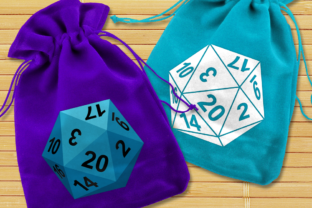
- Numbering Convention: Most d20s are arranged so that opposite faces add up to 21. This is an industry standard designed to distribute high and low results evenly around the die, compensating for minor geometric flaws. Cheaper dice may not adhere to this standard, and any die that deviates should be physically inspected for manufacturing errors.
- Edge Style: Sharp-edged dice are popular among collectors for their clean look, but they tend to stack on top of each other when rolled, requiring a significant roll to ensure randomness. Round-edged or "brick" style dice tumble more freely, making them more practical for high-volume rolling at the table.
Strategic Applications: Who Needs a Quality d20?
Understanding who benefits most from a premium 20 sided die helps clarify the value proposition. The tool must fit the user's specific workflow and environment.
For the Game Master
Your primary concerns are clarity and dramatic weight. A set of mid-range metal dice (zinc alloy) with high-contrast paint is a solid investment. The heft provides a definitive feel when rolling for a dragon's breath weapon or a villain's saving throw. You need a die you can read instantly across a table. Avoid highly patterned or dark dice that hide the numbers. Practical recommendation: Own at least three distinct sets of different colors (e.g., one for the players, one for the villains, one for random tables) to keep your own narrative threads organized.
For the Serious Player
If you are highly invested in the math of your character, a precision-engineered d20 may be appealing. These dice are lab-rolled and certified to have a specific statistical standard deviation. However, consider the law of diminishing returns. A standard acrylic die from a reputable manufacturer is already fair enough for 99% of gameplay. Your money is often better spent on a highly legible, aesthetically pleasing resin die that you enjoy holding and rolling, rather than chasing theoretical perfection.
For the Educator
The d20 is an excellent tool for demonstrating probability distributions. A bulk set of plain acrylic d20s (often sold in packs of 10 or 20) is the most practical choice. They are inexpensive enough to provide one to every student, durable enough to survive being dropped, and uniform enough to provide consistent results for classroom experiments on expected value and variance. In this context, the abrasive durability and low cost of acrylic far outweigh the aesthetic appeal of artisan dice.
Practical Limitations and Realistic Expectations
No tool is without its limitations, and the 20 sided die has several that are worth acknowledging before making a purchase decision.
- Not for High Granularity: If your system requires percentile rolls (1-100), a d20 paired with a d5 or a d10 is clunky. The standard d100 roll uses two ten-sided dice for a reason. The d20 excels at binary success/failure or multi-tier outcomes (critical success, success, failure, fumble) with a step distribution, not linear granularity.
- Digital Alternatives: Virtual tabletops (VTTs) like Roll20, Foundry, and D&D Beyond offer digital dice that are perfectly balanced, automatically calculate modifiers, and cannot be lost or stolen. For remote teams or players who prioritize efficiency, a physical d20 is an impediment. The strength of the physical die is the tactile ritual and environmental focus it creates—something a digital RNG cannot replicate. If your goal is pure statistical performance and speed, digital tools are superior.
- Wear and Tear: A d20 is a consumable tool in the long run. Plastic dice will wear down, particularly the edges and corners, becoming slightly spherical over years of use. Metal dice can chip paint or dent softer rolling surfaces. Recognize that a die is a physical object subject to entropy. A die that has been rolled tens of thousands of times is a testament to use, but it is likely less statistically fair than a brand-new one.
Long-Term Value and Practical Assessment
The long-term value of a 20 sided die is determined by how well it fits its intended use case. A single, well-chosen die can last a lifetime if treated with care and used for its intended purpose. The key is to match the tool to the job.
For daily game use, a high-contrast, sharp-edged resin die from a reputable artisan offers the best balance of aesthetics and function. It provides the pleasing weight and crisp roll characteristic of premium dice without the high cost or surface-damage risk of metal. For travel or teaching, a standard acrylic set is practically indestructible and easily replaceable. For collectors, stone or machined aluminum dice offer unique artistic value, even if their practical rolling performance is secondary.
Ultimately, the best 20 sided die is the one that disappears into your hand and allows you to focus on the game at hand. Its primary job is to provide an unbiased result in a satisfying, transparent manner. By evaluating your specific needs—whether that be durability for classroom use, precision for competitive play, or sheer aesthetic joy for personal satisfaction—you can select a die that serves both as a functional tool and as a meaningful part of your craft.