The Enduring Appeal of the Red Black Hexagon Background
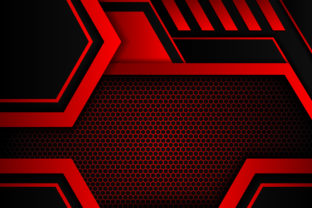
There are design motifs that come and go with the seasons, and then there are visual foundations that feel almost elemental. The red black hexagon background sits firmly in the second category. It is a combination that seems to tap into something primal—the tension between warmth and shadow, the ordered geometry of nature, and the boldness of contrast. While it may appear to be a niche choice at first glance, its presence in branding, digital interfaces, interior design, and even fashion suggests something more universal. Understanding what makes this pairing work, and when it might serve your project best, is a matter of looking beyond trends and into the psychology of shape and color.
Why the Hexagon? Why These Colors?
To appreciate the strength of the red black hexagon background, it helps to consider each element separately. The hexagon is a shape that carries a unique cultural and biological weight. It is the form of a honeycomb, of a snowflake under magnification, of the basalt columns at Giant’s Causeway. It suggests efficiency, strength, and natural order without feeling rigid. Unlike a square, it has a dynamic quality—its angles point outward, creating a sense of movement and interconnectedness. Unlike a circle, it has structure. It occupies a middle ground between organic and engineered, which makes it incredibly versatile.
Red and black, meanwhile, form one of the most potent color pairings in existence. Black grounds the composition. It recedes visually, providing depth, stability, and a sense of the infinite. Red advances. It demands attention, conveys urgency, passion, and energy. Together, they create a visual push and pull that is almost impossible to ignore. When you place these colors into the repeating geometry of hexagons, you get a surface that feels both structured and alive. The pattern can be subtle or aggressive depending on scale and saturation, but it always carries a certain psychological weight.
A Tool for Establishing Mood and Authority
One of the most common real-world applications of the red black hexagon background is in branding for companies that want to convey strength and innovation. Technology startups, gaming platforms, and security-focused services often gravitate toward this combination. The hexagon pattern suggests a network—a system of connected nodes—which is ideal for a company that wants to communicate reliability and integration. The black background absorbs visual noise, making the red accents pop like signals or alerts. This is not a background that whispers. It announces itself, and it tells the viewer that what sits on top of it is serious, polished, and powerful.
For example, a cybersecurity firm might use a dark background with faint red hexagonal lines as the backdrop for its dashboard. The effect is immediate: the user feels that the interface is protected, vigilant, and technologically advanced. Similarly, a sports brand launching a limited-edition shoe line might use a bold red and black hexagon pattern on its landing page to evoke speed, agility, and cutting-edge design. In both cases, the background does more than decorate—it reinforces the brand identity without a single word.
Who Benefits Most from This Design Choice?
While the red black hexagon background can be applied broadly, certain audiences will find it particularly effective. Content creators and streamers often use this kind of background to establish a distinctive visual identity. The pattern reads well on camera, creates a sense of depth behind a talking head, and can be customized with lighting effects to shift the mood from intense to professional. Business owners in the automotive, tech, or fitness industries frequently adopt this motif because it aligns with consumer expectations of durability, performance, and precision.
On the professional side, graphic designers and UI/UX practitioners may reach for this pairing when they need a background that supports foreground content without competing with it. The key is in the execution. A low-contrast, large-format hexagon pattern in dark red and near-black can function as a subtle texture. A high-contrast, small-scale pattern with bright scarlet and pure black becomes a focal point in itself. Understanding this spectrum allows creators to dial the intensity up or down based on the project's needs.
Practical Scenarios Where It Excels
Let us examine a few concrete scenarios where this background proves its value. In the world of event promotion, a poster for a high-energy music festival or a product launch might use a red black hexagon background as the foundation for typography and imagery. The geometry of the hexagons can echo the architecture of the venue or the circuitry of a new device. The red injects excitement, while the black prevents the design from feeling garish. It is a balancing act that, when done well, creates a poster that is both eye-catching and sophisticated.
In interior design, this pattern appears on accent walls, throw pillows, or even flooring tiles. A home office or a gaming room benefits from the energy of red tempered by the grounding effect of black. The hexagon shape adds a modern, almost futuristic feel without straying into cold minimalism. For a retail space—perhaps a boutique sneaker store or a tech accessory pop-up—this background can define a zone within a larger environment, signaling that the products displayed there are bold and forward-thinking.
Strengths and Practical Considerations
The strengths of this background are considerable. It offers high visual impact, strong brand recall, and a sense of depth that flat color backgrounds lack. When used as a web background, it can reduce bounce rates by creating a memorable first impression. In print, it translates well to both digital and offset processes, provided the color values are managed carefully. The geometric repetition also scales nicely; a small swatch and a large wall can both look intentional and complete.
However, there are limitations worth noting. The red black hexagon background is not suitable for every context. Because it carries inherent intensity, it can overwhelm softer content, such as text-heavy articles, medical or wellness sites, or brands that prioritize calm and serenity. It is also possible to misjudge the contrast ratio. If the red is too bright, it can cause visual fatigue. If the black is too absolute, the pattern may disappear into a void. Accessibility is another consideration: text overlaid on this background must be carefully chosen to meet readability standards. White or light gray text typically works best, but testing across devices and lighting conditions is essential.
Evaluating Suitability for Your Project
Before committing to this design, ask yourself a few questions. What is the primary emotion I want the viewer to feel? If the answer includes excitement, urgency, power, or sophistication, this background is a strong candidate. What is the context of use? Digital screens handle the contrast well, but print applications may require a proofing step to ensure the red does not shift toward orange or brown under certain lighting. Who is the audience? Younger demographics and those in creative or technical fields tend to respond positively. A more conservative audience may find it too aggressive for professional communication.
When evaluating templates or custom designs, pay attention to the ratio of red to black. A background that is 70% black with red hexagonal accents behaves very differently than one that is 50% red with black outlines. The former is suitable for long-form reading and corporate presentations. The latter is better for splash pages, hero sections, and short-term campaigns where grabbing attention is the priority. Ultimately, the red black hexagon background is a tool—one that rewards intentionality and punishes hesitation.
Real-World Examples and Lessons Learned
I have seen this pattern applied in ways that work beautifully and in ways that fall flat. One memorable example was a startup that used a subtle, almost charcoal-toned hexagon pattern with a deep burgundy accent as the background for their entire SaaS platform. The effect was professional, unique, and memorable without being distracting. Users commented on the design in surveys, which is rare for a background. Conversely, I recall a campaign where the red was oversaturated to the point of being nearly fluorescent, and the hexagons were too small, creating a dizzying moiré effect on screen. The lesson is clear: restraint is as important as ambition.
For those building their own designs, start with a dark base and introduce red selectively. Use the hexagon pattern as a texture rather than a wallpaper. Overlay it with a gradient or a semi-transparent layer if the contrast feels too harsh. Test the design on a high-brightness monitor and on a mobile screen in natural light. If the pattern holds up in both conditions, you have a winner. If not, adjust the hue, saturation, or scale until it feels balanced.
Final Thoughts on Making It Work
The red black hexagon background is not a universal solution, but it is a remarkably effective one when applied with purpose. It bridges the gap between organic and geometric, passionate and controlled, modern and timeless. Whether you are building a brand, designing a space, or creating content that needs to stand out in a crowded feed, this combination offers a foundation that is both assertive and adaptable. The best designs do not shout—they resonate. This background, at its best, does exactly that.
If you are considering this for your next project, take the time to experiment with different hexagon scales, red tones, and placement. What works for a gaming interface may not work for a financial dashboard, and what sings on a billboard may whisper on a business card. Trust your eyes, test on real users, and remember that the most powerful design choices are those that serve the content, not the other way around. The red black hexagon background has the potential to elevate your work—use it wisely and it will not disappoint.