Understanding Halftone 3D Logo Design: A Practical Guide for Choosing Your Visual Style
When exploring logo design directions, you may encounter the term Halftone 3D Logo Design and wonder how it differs from other approaches. This style blends two distinct visual techniques—halftone patterns and three-dimensional depth—into a single mark that can feel both retro and futuristic. Whether you are rebranding, commissioning a new identity, or simply researching possibilities, understanding what this style offers and where it fits within the broader landscape of logo design will help you make a more informed decision.
What Makes Halftone 3D Logo Design Distinct
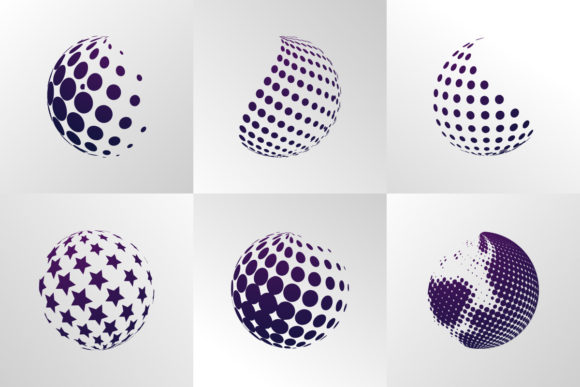
At its core, Halftone 3D Logo Design combines two visual mechanisms. Halftone refers to the use of small dots of varying size, spacing, or density to simulate gradients, shadows, or tonal transitions. When applied to a logo, this creates a textured, print-like appearance reminiscent of comic books, vintage posters, or screen-printed graphics. The 3D element introduces depth through shading, perspective, or layered forms, giving the logo a volumetric quality that feels tangible.
What makes this combination distinct is the tension between the mechanical, dotted texture of halftone and the smooth illusion of three-dimensional space. The dots do not simply sit on a flat surface; they wrap around curves, follow contours, and suggest light and shadow. This produces a visual effect that is simultaneously graphic and dimensional, structured yet organic. Unlike a standard gradient that blends colors seamlessly, halftone introduces a deliberate grain that catches the eye and invites closer inspection.
The technique is not new—halftone printing dates back over a century—but its application in 3D logo contexts has gained renewed interest as digital tools make it easier to generate precise dot patterns and render realistic depth. Modern vector software allows designers to control dot size, angle, and density with great accuracy, while 3D modeling applications can map halftone textures onto extruded or rotated forms.
Comparing Halftone 3D with Other Logo Styles
To evaluate whether Halftone 3D Logo Design is right for your project, it helps to see how it stacks up against common alternatives. No single style is universally superior; each carries tradeoffs that matter depending on your brand context, application needs, and aesthetic goals.
Flat Design vs. Halftone 3D
Flat design relies on solid colors, minimal shading, and two-dimensional forms. It is clean, scalable, and works well across digital screens. Halftone 3D, by contrast, introduces texture and depth that flat design deliberately avoids. If your brand values simplicity, clarity, and modern minimalism, flat design may serve you better. However, if you want a logo that feels tactile, nostalgic, or richly detailed, Halftone 3D offers a level of visual interest that flat design cannot replicate.
The tradeoff is that Halftone 3D logos require more careful rendering at small sizes. Halftone dots can become indistinct or muddy when scaled down, especially on low-resolution screens or small merchandise imprint areas. Flat logos generally maintain legibility better at extreme reductions.
Gradient-Based 3D vs. Halftone 3D
Many 3D logos use smooth gradient blends to suggest depth and lighting. This approach creates a polished, glossy look common in tech and entertainment brands. Halftone 3D achieves depth differently: instead of smooth tonal transitions, it uses dotted patterns that create a stippled, textured gradient. The result is less glossy and more graphic, with an almost printed, handmade feel.
If your brand identity calls for sleek, high-gloss realism, a gradient-based 3D approach may be more appropriate. If you prefer a style that nods to print heritage, pop art, or alternative culture, Halftone 3D provides a distinctive voice that smooth gradients lack. The choice often comes down to whether you want your logo to feel digital-native or print-rooted.
Traditional Halftone (Flat) vs. Halftone 3D
Traditional halftone logos exist on a flat plane. They use dots to create shading and texture but do not simulate three-dimensional space. This flat halftone style is popular for logos that want a retro or grunge aesthetic without the complexity of depth. Halftone 3D adds an extra layer by making the forms themselves appear volumetric—like a sphere rendered in dots rather than a flat circle filled with a dot gradient.
The additional dimension increases visual impact but also increases production complexity. A flat halftone logo is relatively straightforward to reproduce in print or on screen. A Halftone 3D logo may require more careful color separation, especially if the depth is achieved through multiple dot layers or overlapping patterns. If your budget or timeline is tight, flat halftone may be the more practical route.
Strengths and Tradeoffs of the Halftone 3D Approach
Every design choice involves weighing benefits against limitations. Halftone 3D Logo Design offers several notable strengths, but it is not without challenges.
Strengths
- Visual distinction: The combination of texture and depth is relatively uncommon, helping your logo stand out in crowded markets.
- Storytelling potential: The halftone pattern evokes print history, craftsmanship, and analog processes, which can communicate heritage or authenticity.
- Versatile tone: Depending on execution, Halftone 3D can feel playful (comic-book style), edgy (punk or grunge), or sophisticated (fine-art stippling).
- Memorability: The tactile, detailed appearance often leaves a stronger impression than simpler flat logos.
Tradeoffs
- Scalability challenges: Halftone dots can become too small to render clearly at reduced sizes, and too large at expanded sizes may look coarse. Careful optimization is essential.
- Production complexity: Recreating the effect in embroidery, screen printing, or low-resolution digital contexts may require simplified versions or alternate treatments.
- Trend sensitivity: While halftone has enduring appeal, its strong stylistic character may date faster than more neutral approaches. Consider whether your brand needs a timeless mark or one that embraces a specific era.
- Higher design cost: Creating a well-executed Halftone 3D logo typically requires more skill, time, and iteration than a flat or simple gradient logo. Budget accordingly.
When Halftone 3D Logo Design Works Best
Certain contexts and brand personalities align naturally with this style. Understanding best-fit scenarios helps you decide whether to pursue it or explore other options.
Halftone 3D Logo Design tends to excel in industries where visual texture, craft, or alternative aesthetics are valued. Examples include music labels, breweries, apparel brands, publishing houses, art galleries, and creative agencies. If your audience appreciates detail, nostalgia, or handmade quality, this style can resonate deeply.
It also works well when you need a logo that functions as a centerpiece across larger brand materials. Because the halftone texture can be extended into patterns, backgrounds, or iconography, it offers a cohesive visual system beyond the logo itself. Brands that plan to use their logo in large format—posters, packaging, signage—benefit from the rich detail that Halftone 3D provides.
Digital applications are also possible, but require care. On high-resolution screens, the dot patterns render beautifully. On smaller mobile screens or lower-resolution displays, the dots may alias or blur. If your primary touchpoint is digital, you may need a responsive version that simplifies the halftone effect at smaller breakpoints.
When Another Approach May Serve You Better
Not every brand benefits from the complexity of Halftone 3D Logo Design. If your primary logo application is a tiny app icon, a social media avatar, or a favicon, the intricate dot patterns will likely be lost. In these cases, a simpler flat mark or a minimal 3D treatment without halftone texture will perform better.
Similarly, if your brand positioning emphasizes speed, efficiency, or high-tech precision, the handcrafted, analog feel of halftone may send the wrong message. A clean, geometric 3D logo with smooth gradients may better communicate innovation and polish.
Organizations that require maximum flexibility across diverse media—from letterhead to billboards to embroidery—may find that Halftone 3D limits their options. Creating alternate versions for different contexts is possible, but it adds complexity to brand management. If simplicity and consistency across every application are non-negotiable, a less ornate logo style will be easier to maintain.
Key Decision Factors for Your Brand
When weighing Halftone 3D Logo Design against other styles, consider these factors:
- Primary application: Where will the logo appear most often? Digital, print, large format, small format? Each medium handles halftone differently.
- Brand personality: Does your brand identity align with craft, nostalgia, and texture, or with minimalism, modernity, and precision?
- Audience expectations: Will your target audience appreciate the detail and style, or might they find it distracting or dated?
- Budget and timeline: Do you have the resources to develop and refine a complex logo, including potential alternate versions for different uses?
- Longevity: Are you comfortable with a logo that has a strong stylistic signature, or do you need a more neutral mark that will not feel tied to a particular era?
There is no single right answer. The best choice depends on how these factors align with your specific goals. Halftone 3D Logo Design offers a unique visual language that can be incredibly effective when matched with the right brand context. In other situations, a simpler or more conventional approach will serve you better.
If you decide to pursue this style, work with a designer who understands both halftone rendering and 3D form. Ask to see test renders at various sizes and in different media before finalizing the design. A well-executed Halftone 3D logo can become a memorable, conversation-starting asset for your brand—but only if it is built with the same care and precision that the technique itself demands.