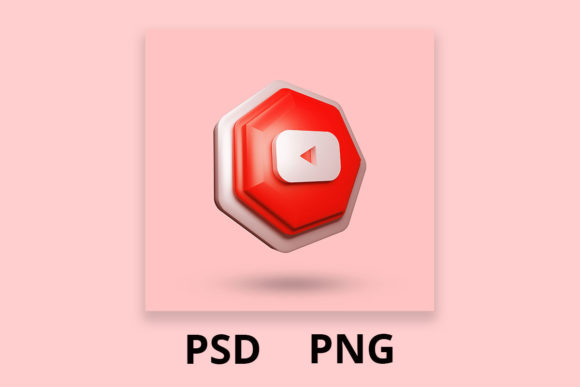
YouTube 3D Icon Design: A Practical Guide for Creators and Brand Builders
First impressions on YouTube happen fast. Viewers decide whether to click, subscribe, or scroll past within a fraction of a second. A channel icon — that small circular image next to your channel name — plays an outsized role in that decision. Over the past few years, a distinct approach has gained traction among serious creators and brands: YouTube 3D icon design. This isn't about a flat logo slapped into a circle. It is about crafting a dimensional, visually engaging mark that communicates depth, professionalism, and personality. For anyone building a presence on the platform, understanding what this style offers and whether it fits your workflow is worth the time.
What Makes YouTube 3D Icon Design Worth Discussing
At its core, YouTube 3D icon design refers to creating channel icons that use shading, lighting, texture, and depth to produce a three-dimensional appearance. Unlike flat or minimalist icons, these designs simulate real-world volume. A 3D icon might feature a beveled edge, a subtle drop shadow, a glossy highlight, or layered geometry that makes the icon look like a physical object. This approach borrows techniques from product rendering, character design, and motion graphics, but adapts them to the tight square constraints of YouTube's icon format.
The purpose is straightforward: stand out in a crowded subscription feed and search results page. When viewers browse dozens of channels, a 3D icon can catch the eye more effectively than a simple two-color flat mark. It signals that the creator has invested time and skill into their brand presentation. For businesses, it conveys a level of polish that matches professional video production. For educators and creators, it can make a channel feel more approachable and memorable.
Key Characteristics That Define the Style
Not every icon with a drop shadow qualifies as a 3D design. Real YouTube 3D icon design involves a few core characteristics that separate it from simpler treatments:
- Lighting and shading: Consistent light sources create highlights and shadows that suggest form. A sphere should look round, not flat.
- Depth and layering: Elements appear stacked or extruded. Foreground and background planes are clearly separated, often with subtle blur or opacity shifts.
- Texture and material: Surfaces mimic real materials — glossy plastic, brushed metal, soft fabric, glass, or matte rubber. This adds tactile believability.
- Subtle animation (in some cases): While the static icon remains a fixed image, the design often lends itself well to short looping animations for channel trailers or social posts.
These characteristics work together to create an icon that feels tangible. The viewer subconsciously registers it as something they could reach out and touch. That psychological response is part of what makes the style effective for building recognition.
Practical Value in Real-World Use
Let's look at where YouTube 3D icon design delivers measurable benefits. For a tech reviewer, a 3D icon shaped like a stylized camera lens with reflective glass immediately communicates the channel's focus. For a cooking channel, a 3D whisk or spatula with realistic metal texture reinforces the niche. The visual shorthand is stronger and more memorable than a flat symbol.
In practice, channels that adopt this style often report higher click-through rates from subscription feeds. When a viewer sees a flat icon next to a dimensional one, the dimensional icon naturally draws more attention due to contrast in visual weight. This is especially true on mobile screens, where icons are small and subtle differences matter. A well-executed 3D icon holds its clarity even at thumbnail size because the lighting and shadow create distinct edges.
Another practical advantage is brand consistency. A 3D icon can be extended into other assets — channel banners, end screens, merch designs, and intro animations — creating a cohesive visual system. The dimensional look ties together well with modern video graphics and lower-thirds, especially if the channel already uses 3D text or product shots in its content.
Quality and Usability Considerations
The quality of a YouTube 3D icon depends heavily on the skill of the designer. A poorly executed 3D icon with inconsistent lighting, unnatural proportions, or jagged edges will hurt credibility more than a clean flat icon. The difference between amateur and professional execution is immediately visible.
Usability also matters. The icon must work at very small sizes — YouTube displays channel icons at around 80x80 pixels in many places, and even smaller in notification dropdowns. A 3D icon that relies on fine detail, thin lines, or subtle gradients may lose legibility when scaled down. Good 3D icon design accounts for this by using bold shapes, high contrast between depth layers, and clear silhouettes. Testing the icon at actual display sizes before finalizing is a step too many creators skip.
Flexibility is another factor. A 3D icon typically looks best on a solid background — white, dark, or a brand color. On busy or patterned backgrounds, the depth effects can clash or become muddy. Most YouTube themes use a clean white or dark mode layout, so this is rarely a problem, but it is worth checking how the icon appears against different background colors within the platform.
Who Benefits Most and When
YouTube 3D icon design is not a universal solution. It suits certain channels and creators better than others. Here is a breakdown of who gains the most from this approach:
- Product-focused brands and businesses: If your channel showcases physical products, a 3D icon that visually echoes your product line builds instant association. Think of a beverage brand using a 3D bottle cap or a tech company using a stylized device.
- Educators and tutorial creators: A 3D icon related to your subject matter — a book, a tool, a symbol — adds approachability and signals expertise. The dimensional quality makes the channel feel more established.
- Entertainment and gaming channels: 3D icons fit naturally in gaming and entertainment niches where audiences already expect polished visuals. A character avatar, mascot, or game element rendered in 3D aligns with audience expectations.
- Freelancers and agencies: For those who offer design or production services, a 3D icon acts as a portfolio piece in itself. It demonstrates capability and attention to detail before a potential client even watches a video.
- Established channels rebranding: Channels with an existing audience may benefit from a 3D icon during a rebrand. The visual shift signals change without losing recognition, especially if the new icon retains core brand colors or shapes.
On the other hand, channels focused on minimalist aesthetics, text-based content, or highly personal vlogs may find a 3D icon feels overly produced. If your brand identity relies on simplicity, approachability, or DIY authenticity, a flat icon may align better with viewer expectations.
Professional Observations and Recommendations
From a design perspective, the most effective YouTube 3D icons share a few common traits. First, they start with a strong silhouette. Before any lighting or texture is added, the shape reads clearly at any size. Second, the lighting is kept simple — one or two light sources, consistent across all surfaces. Overcomplicating the lighting is the most common mistake I see in amateur attempts. Third, the best 3D icons use no more than three or four distinct depth layers. Beyond that, the icon becomes busy and loses impact.
If you are considering a 3D icon for your channel, start by defining the core symbol or object that represents your content. It should be something specific to your niche, not a generic shape. A globe is too broad unless your channel is literally about world travel or geography. A microphone alone works if you produce audio content, but a microphone combined with an element unique to your format — like a waveform or a specific color treatment — adds distinction.
For those without 3D design experience, hiring a professional is usually worth the investment. Platforms like Behance, Dribbble, and dedicated icon design marketplaces offer specialists who understand YouTube's constraints. Expect to pay anywhere from $100 to $500 for a high-quality custom 3D icon, depending on complexity and revisions. Alternatively, some creators use 3D modeling tools like Blender or Spline to create their own, but the learning curve is steep for results that look polished.
Possible Limitations to Keep in Mind
No design approach is without trade-offs. YouTube 3D icon design has a few limitations worth acknowledging:
- File size and format: While YouTube accepts PNG and JPG, a 3D icon with complex gradients and shadows can produce a larger file than a flat icon. This is rarely a performance issue, but ensure your export settings balance quality and file size.
- Animation constraints: YouTube does not support animated channel icons in the standard UI. If you create animated 3D content, it can only be used off-platform or in video intros. The static icon itself must stand alone.
- Trend lifespan: 3D design trends evolve. What looks modern today may feel dated in a few years. Flat design has proven remarkably durable, while heavily glossy or beveled 3D styles from the early 2010s now look outdated. Aim for a balanced 3D look with subtle depth rather than extreme realism to extend longevity.
- Accessibility: Icons with low contrast between depth layers may be harder to read for viewers with visual impairments. Test your icon in grayscale mode to ensure it remains distinguishable.
Acknowledging these limitations upfront helps you make an informed decision rather than chasing a trend without consideration of long-term practicality.
Effectiveness and Long-Term Value
When executed well, a YouTube 3D icon pays for itself in brand recognition over time. Unlike video-specific graphics that change with each upload, the channel icon is a persistent asset. It appears in every notification, every comment, every search result. A distinctive, well-crafted 3D icon becomes a visual anchor for your entire channel identity.
The long-term value also depends on how consistently you use the icon. If you update it every few months, you lose the cumulative recognition that builds familiarity. A 3D icon should be designed with a shelf life of at least two to three years. Choosing a design that references your channel's core subject rather than a passing trend helps achieve that endurance.
For channels that eventually expand into other platforms, the same icon — adapted for profile pictures on Instagram, Twitter, LinkedIn, or TikTok — maintains cross-platform consistency. A 3D icon that works well in a square format translates easily to circular and rounded-square crops with only minor adjustments.
Deciding If YouTube 3D Icon Design Fits Your Project
The most honest answer is that it depends on your goals, audience, and existing brand direction. If your channel competes in a saturated niche where visual differentiation matters, a 3D icon provides a tangible edge. If your production quality is already high, the icon should match that standard — a polished video paired with a flat, generic icon creates a mismatch that viewers subconsciously register.
If your channel is still small and you are testing content formats, a simple flat icon may be the smarter investment. You can always upgrade to a 3D design once your brand direction solidifies and you have budget or skills to commit. The reverse — downgrading from a 3D icon to a flat one — can feel like a step backward for an audience that already associates the dimensional look with your brand.
Ultimately, the best YouTube icon is the one that your target audience remembers and trusts. YouTube 3D icon design offers a powerful tool for achieving that recognition, but it requires thoughtful execution, an understanding of the platform's constraints, and a clear sense of how it fits into your broader visual identity. When those conditions align, it elevates your channel presence in a way that flat design alone cannot match.