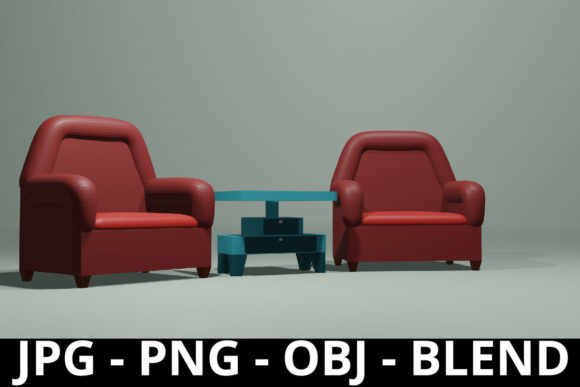
3D Rendering Sofa and Table: Redefining Interior Visualization
When you browse an online furniture store or flip through a design portfolio, the images that stop your scroll are often not photographs. They are carefully crafted digital scenes—3D renderings of a sofa and table that look so real you can almost feel the fabric. This shift from traditional photography to computer-generated imagery is not just a technical upgrade; it is a fundamental change in how we conceive, market, and buy furniture. Understanding what goes into a high-quality 3D rendering sofa and table composition helps professionals, creators, and even casual shoppers appreciate the craft behind the image and make smarter decisions in their own projects.
What Makes a Sofa and Table Rendering More Than Just a Picture
At its core, a 3D rendering of a sofa and table is a digital simulation of physical objects placed in a virtual environment. The process involves modeling the geometry of each piece, applying materials that mimic real-world surfaces, setting up lighting that behaves naturally, and composing a scene that feels lived in. But the real value lies in what this technology enables. Unlike a photograph, a rendering allows you to change the color of the upholstery, swap the table finish, or move the entire setup to a different room without reshooting. This flexibility is why architects, interior designers, and e-commerce teams rely on 3D rendering sofa and table workflows to present options to clients and customers before a single physical item is produced.
The Shift from Staged Photography to Digital Scenes
Ten years ago, furniture catalogs were shot in rented studios with stylists adjusting cushions and lighting for hours. Today, many of those images are created entirely in software. The evolution has been driven by cost, speed, and creative control. A single photoshoot for a sofa and table set might require shipping both pieces, hiring a photographer, and paying for studio time. In contrast, a skilled 3D artist can produce multiple variations of the same scene in a fraction of the time and at a fraction of the cost. This shift has democratized high-quality visuals, allowing small businesses and independent creators to produce assets that rival those of large brands.
Why This Matters Now: Trends Reshaping Furniture Visualization
Several converging trends are making 3D rendering sofa and table scenes increasingly relevant. The rise of online shopping means that customers cannot touch or sit on furniture before buying. A photorealistic rendering bridges that gap by providing a detailed, accurate preview. At the same time, the growth of customization in furniture—where buyers choose fabrics, leg styles, and table shapes—demands a visual tool that can show every permutation without holding inventory. Real-time rendering engines like those used in virtual showrooms allow customers to interact with a 3D scene, rotating the sofa and inspecting the table from every angle.
- E-commerce demands speed: New product lines need visuals within days, not weeks.
- Sustainability goals: Digital samples reduce the need for physical prototypes and shipping samples.
- Personalization expectations: Shoppers want to see their chosen configuration before ordering.
- Remote collaboration: Design teams and clients review renderings from different locations without gathering in a studio.
How Real-Time Rendering Is Changing the Game
Until recently, creating a high-quality rendering of a sofa and table required a powerful computer and hours of processing time. Now, real-time engines allow you to adjust lighting, swap materials, and reposition the camera with instant feedback. This has practical implications for designers who need to iterate quickly. For example, a furniture brand might present three different table finishes alongside the same sofa in a single interactive presentation. The client can see the options side by side and make a decision without waiting for a new render to finish. This immediacy speeds up approvals and reduces back-and-forth.
Practical Implications for Creators, Businesses, and Everyday Users
Whether you are a freelance designer, a small business owner, or a marketer, understanding the capabilities of 3D rendering sofa and table scenes can open up new possibilities. For interior designers, renderings become a communication tool—clients can see exactly what the final room will look like, reducing misunderstandings. For furniture retailers, high-quality renders replace many traditional product photos, saving money on photography while enabling more variety. For hobbyists and home renovators, learning basic 3D rendering allows you to visualize your own space before buying furniture, avoiding costly mistakes.
Realistic Examples from Everyday Practice
Consider a small furniture brand launching a new collection. Instead of producing a dozen physical samples, they create 3D models of each sofa and table variant. They generate images for the website, social media, and printed catalog simultaneously. When a customer requests a custom fabric, the brand can produce a new render within an hour and email it directly. That level of responsiveness builds trust and increases conversion rates. Another example: an interior designer working remotely with a client in another city. The designer models the client’s living room, places a sofa and coffee table from the designer’s product library, and renders several lighting options. The client sees the options and feels confident in the purchase.
Evolution of the Craft: From Basic Models to Photorealism
The journey of 3D rendering sofa and table scenes has been marked by steady improvements in software capabilities and hardware performance. Early 3D models were blocky and unconvincing, with flat colors and harsh shadows. Today, artists can simulate the weave of a fabric, the slight reflectivity of a wooden tabletop, and the soft bounce of light from a nearby wall. Modern tools use physically based rendering, meaning that materials are defined by real-world properties like roughness, metallicity, and translucency. This shift has made it possible to achieve lifelike results that hold up under close inspection.
- Modeling: From simple extrusions to complex subdivision surfaces with realistic edge wear.
- Texturing: Procedural and scanned textures now capture grain, stain, and fabric patterns.
- Lighting: Global illumination and HDR environments mimic real-world light behavior.
- Post-processing: Color grading, depth of field, and subtle grain add photographic authenticity.
Why Photorealism Matters for Trust
In the furniture industry, trust is everything. A customer who sees a rendering that looks fake will hesitate to buy. A rendering that is indistinguishable from a photograph builds confidence. This is why brands invest in skilled artists and high-end rendering software. The goal is not just to show the product, but to convey its quality, scale, and feel. A well-executed 3D rendering sofa and table scene can communicate that the sofa is comfortable, the table is sturdy, and the combination works well in a real room. That emotional connection is difficult to achieve with flat line drawings or low-quality images.
How to Get Started with Your Own Sofa and Table Renderings
If you are a creator or business owner looking to produce your own renderings, the path is more accessible than ever. Free and affordable software options exist, along with extensive tutorials and online communities. Start by learning the basics of 3D modeling—creating a simple sofa shape and a table with basic geometry. Then move on to materials and lighting. Focus on one scene at a time and iterate. Many beginners make the mistake of chasing complexity too early. Instead, master a single chair or small table before tackling a full living room.
- Choose a tool: Blender (free), SketchUp, or Cinema 4D are popular choices for furniture rendering.
- Learn modeling fundamentals: Understand edge flow, subdivision, and how to create clean geometry.
- Study real furniture: Look at how fabric drapes, how wood grains run, and how shadows fall around legs.
- Practice with lighting: Try different times of day, window placements, and artificial sources.
- Seek feedback: Share your work in forums or with peers to improve faster.
Common Pitfalls and How to Avoid Them
Even experienced artists encounter challenges with 3D rendering sofa and table scenes. One frequent issue is scale—a sofa that looks correctly sized alone may feel too large or too small when placed next to the table. Always use reference measurements and human-scale objects like a book or a lamp to check proportions. Another issue is over-reliance on default materials. A generic plastic look can ruin the realism of an otherwise well-modeled piece. Spend time adjusting roughness, reflectivity, and color to match the intended material. Finally, avoid cluttered scenes; a sofa and table combination should be the focus, not competing with extraneous decor.
Looking Ahead: Where Furniture Rendering Is Headed
The future of 3D rendering sofa and table visualization is tied to broader developments in immersive technology. Augmented reality (AR) already allows customers to place a sofa model in their own living room through a smartphone camera. As AR becomes more accurate with lighting and occlusion, these experiences will feel even more real. Virtual reality showrooms will let people walk around a sofa and table set, examining every detail before buying. Generative AI tools are also starting to assist with texture creation and scene composition, though human oversight remains essential for quality and taste.
What will not change is the core need: people want to see what a sofa and table look like in a believable context. Whether that context is a static image, an interactive 3D viewer, or an AR overlay, the principles of good design and realistic presentation will always matter. For professionals and businesses, investing in solid rendering skills today will pay off as these technologies become more integrated into the purchasing process.
Ultimately, a 3D rendering sofa and table scene is more than a digital image. It is a tool for decision-making, a bridge between imagination and reality, and a craft that blends technical skill with artistic vision. By understanding how these renderings are made and why they work, you can use them more effectively in your own work—whether you are selling furniture, designing interiors, or simply planning your next living room refresh.