Abstract Colorful 3D Shape Patterns: The Art, Science, and Design Revolution
Imagine a dynamic swirl of glowing spheres, floating geometric pyramids, undulating waves of neon gradients, and translucent cubes rotating in infinite space. This is the world of abstract colorful 3D shape patterns — a visual language that has taken over everything from website hero sections and mobile app interfaces to album covers, sneaker designs, and even architectural installations. But what exactly are these patterns, why are they so compelling, and how can you use them effectively in your own projects? This article unpacks the topic from the ground up, exploring the creative, technological, and practical dimensions of abstract colorful 3D shape patterns.
What Are Abstract Colorful 3D Shape Patterns?
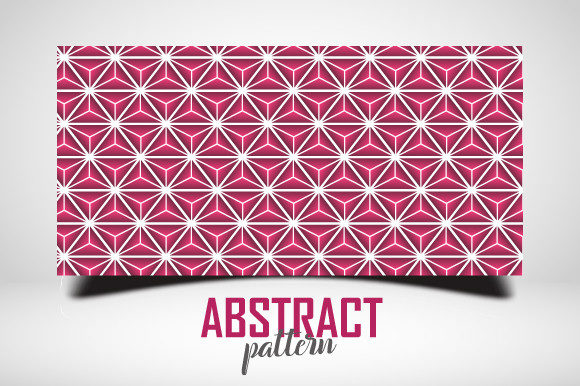
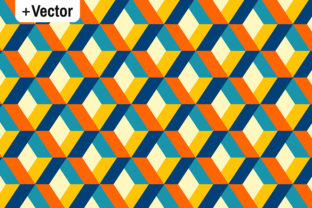
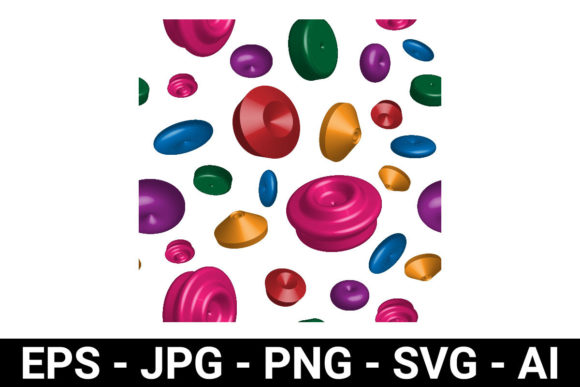
At its simplest, an abstract colorful 3D shape pattern is a repeating or semi-repeating arrangement of three-dimensional forms — such as spheres, toruses, dodecahedrons, ribbons, or wave-like surfaces — rendered in a palette of vivid, often high-contrast or gradient-based colors. Unlike realistic 3D renders that aim to mimic real-world objects (like a chair or a car), abstract patterns prioritize form, color, motion, and composition over literal representation.
These patterns are typically generated using computer graphics software such as Blender, Cinema 4D, Maya, or specialized procedural tools like Houdini and TouchDesigner. Artists and designers manipulate parameters like lighting, reflection, refraction, texture, and animation to create visuals that feel futuristic, energetic, and immersive.
Key Characteristics of Abstract 3D Patterns
- Geometric or organic shapes: From sharp icosahedrons to smooth, blob-like forms.
- Vibrant color palettes: Frequently using gradients, neon tones, pastels, or metallics.
- Depth and dimensionality: Lighting, shadows, and perspective create a convincing sense of 3D space.
- Repetition with variation: Patterns may repeat but often include subtle changes in scale, rotation, or color.
- Motion (in digital versions): Slow rotation, pulsating colors, or flowing transitions add life.
The Purpose and Significance of Abstract 3D Colorful Patterns
Why have these visuals exploded in popularity across design, branding, and media? The answer lies in psychology, aesthetics, and technological accessibility.
Visual Impact and Emotional Resonance
Bright, complex, and unfamiliar shapes grab attention in a way that flat, minimal designs often cannot. The combination of depth, color, and motion triggers curiosity and wonder. For many viewers, abstract 3D patterns evoke feelings of futurism, innovation, creativity, and fluidity. Brands that use these visuals signal that they are modern, cutting-edge, and unafraid to break conventions.
Standing Out in a Crowded Digital Landscape
In an age where every brand uses flat icons and minimal UI, abstract 3D patterns offer differentiation. A website hero featuring a floating, color-shifting torus immediately feels more dynamic and memorable than a static gradient background. This is why tech startups, creative agencies, and entertainment platforms frequently adopt this aesthetic.
Functional Versatility
Abstract colorful 3D shapes serve multiple functions:
- As hero imagery on landing pages.
- As background textures for social media posts.
- As branding elements (e.g., logos, app icons).
- As illustrative content in presentations and explainer videos.
- As AR/VR environments and digital art installations.
In Business and Branding
Companies like Stripe, Coinbase, and various SaaS platforms have popularized the use of abstract 3D shapes in branding. These visuals convey sophistication and technological prowess without needing to show a literal product. For example, a fintech startup might use a pattern of floating golden octahedrons to suggest security, value, and precision. An education platform might use playful, soft-colored blobs to communicate friendliness and approachability.
One practical tip: When using abstract 3D patterns in branding, ensure the style aligns with your brand's personality. Sharp, angular shapes with cool blues and silvers convey tech and precision. Soft, rounded forms with warm pastels feel nurturing and creative.
In Web and UI Design
Abstract colorful 3D patterns are especially popular in:
- Hero sections: A large, animated 3D shape draws the eye and sets the tone.
- Backgrounds: Subtle, slow-moving patterns add depth without distracting from content.
- Interactive elements: Hover effects where a shape tilts or changes color based on mouse position.
- Loading screens: Animated 3D patterns make wait times feel shorter and more engaging.
Performance note: While stunning, heavy 3D animations can impact page load speed. Use optimized formats (e.g., Lottie files, compressed GIFs, or WebGL with efficient code) to keep experiences smooth.
In Education and Visualization
Abstract 3D patterns are not just decorative — they can aid understanding. Complex data visualizations, mathematical concepts (like fractal geometry), and scientific models often use colorful, abstract 3D representations to make ideas more accessible. For example, a pattern of rotating polyhedra can help students grasp symmetry and spatial relationships.
In Creative and Artistic Expression
Digital artists and motion designers use abstract colorful 3D patterns as a medium for personal expression. Platforms like Behance, Dribbble, and Instagram are filled with mesmerizing loops and generative art pieces. The democratization of 3D software means that anyone with a computer and curiosity can start creating — a trend that has given rise to a global community of 3D abstract artists.
Common Misunderstandings and Assumptions
Despite their popularity, abstract colorful 3D shape patterns are often misunderstood. Let's clarify a few points.
Misunderstanding 1: "They're just random shapes with no meaning."
While abstract patterns can be random, the best examples are intentionally composed. Artists consider color theory, form hierarchy, negative space, and motion kinetics. A well-crafted abstract 3D pattern can convey complex ideas like growth, connection, energy, or balance — just as effectively as a literal image.
Misunderstanding 2: "They only work for tech or futuristic brands."
Not true. Abstract colorful 3D patterns can be adapted for healthcare, education, fashion, food, and even finance. The key is choosing the right shapes, colors, and motions. A healthcare brand might use soft, organic shapes in calming blues and greens; a food brand could use bright, juicy-looking spheres and droplets. The aesthetic is flexible.
Misunderstanding 3: "Creating them requires expensive software and advanced skills."
While professional tools like Cinema 4D are powerful, free alternatives like Blender or online tools (e.g., Vectary, Spline, or even Canva's 3D features) make creation accessible. Many tutorials exist for beginners, and the learning curve for basic abstract patterns is surprisingly gentle. You can start with simple shapes and gradients and gradually explore more complex procedures.
Practical Steps to Start Using Abstract Colorful 3D Patterns
Whether you're a designer, marketer, or curious enthusiast, here's how you can integrate these visuals into your work or personal projects.
1. Find Inspiration and Define a Mood
Explore platforms like Pinterest, Behance, and Dribbble with keywords such as "abstract 3D shapes," "colorful geometric patterns," or "neon 3D art." Save examples that resonate with your project's tone. Create a mood board that captures color palettes, shape languages, and light styles you'd like to emulate.
2. Choose Your Tool
- Beginner-friendly: Spline, Vectary, or Canva (built-in 3D elements).
- Intermediate: Blender (free, massive community, endless tutorials).
- Advanced: Cinema 4D, Houdini (for procedural and complex animations).
3. Start Simple with Shapes
Begin with three to five basic 3D shapes (e.g., sphere, cube, cylinder, torus, cone). Arrange them in a grid or organic cluster. Experiment with materials: glossy, matte, metallic, or glass-like. Apply gradient colors and adjust lighting (area lights, point lights, or HDRI environments) to create depth.
4. Add Motion (Optional but Powerful)
A slow, subtle rotation or a gentle floating animation can transform a static pattern into an engaging visual. Most 3D tools allow you to set keyframes for position, rotation, and material properties. For web use, export as a Lottie file, GIF, or video (MP4/WebM).
5. Test in Context
Place your pattern into the intended environment — whether that's a website mockup, a presentation slide, or a social media template. Check how it interacts with text, other images, and user interface elements. Sometimes the pattern may need to be less prominent (lower opacity, softer colors) to avoid overwhelming other content.
Ethical and Accessibility Considerations
While abstract colorful 3D patterns are visually exciting, it's important to use them responsibly.
- Motion sensitivity: Some people experience dizziness or nausea from fast or flashing animations. Always provide a way to pause or reduce motion for accessibility.
- Color contrast: Ensure that text and important UI elements remain legible over the pattern. Avoid placing crucial information over highly detailed or fast-moving parts.
- Overuse: A little goes a long way. Use abstract 3D patterns as an accent or feature, not as a constant backdrop for every page or asset.
The Future of Abstract Colorful 3D Patterns
The trend shows no signs of slowing. With the rise of AI-generated art, tools like Midjourney and DALL·E can produce stunning abstract 3D concepts instantly, though human curation still guides quality and intent. Meanwhile, real-time engines like Unreal Engine and Unity are making interactive 3D patterns possible within web and mobile experiences. We are moving toward a world where digital environments will be increasingly three-dimensional, colorful, and abstract — not just in games and films, but in everyday apps, virtual offices, and social platforms.
For creators, the opportunity is clear: mastering the language of abstract colorful 3D shape patterns opens doors to more expressive, engaging, and memorable design work. Whether you are building a brand identity, designing a user interface, or simply exploring a new art form, these vivid spatial compositions offer a playground of endless possibility.
Final Thoughts
Abstract colorful 3D shape patterns are far more than fleeting visual fads. They represent a convergence of art, technology, and psychology — a way to communicate ideas and emotions without words, and a tool to captivate audiences in an increasingly saturated visual world. By understanding their foundations, experimenting with creation, and applying them thoughtfully, you can harness their power for your own creative and professional projects.
So go ahead: spin a sphere, pour a gradient, light a surface, and see where the shapes take you.
This article was designed to help beginners and experienced readers alike build a richer understanding of abstract colorful 3D shape patterns — their origins, uses, and future potential in design, branding, education, and everyday life.