Geometrical Abstract 3D Pattern Design: Defining Visual Depth in Modern Creative Workflows
Few visual trends have demonstrated the staying power of Geometrical Abstract 3D Pattern Design. What began as an experimental niche within digital art has evolved into a foundational styling language for branding, UI design, product packaging, motion graphics, and architectural visualization. The appeal lies in its rare ability to blend mathematical precision with organic visual interest. When a pattern shifts from a flat 2D arrangement into a three-dimensional construction, it immediately commands attention. Designers are increasingly adopting this approach not just for aesthetic reasons, but for the functional advantages it brings to communication and user engagement.
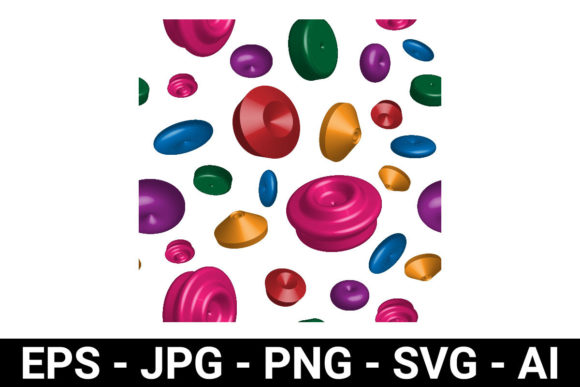
At its core, Geometrical Abstract 3D Pattern Design refers to compositions where geometric shapes—triangles, hexagons, spheres, cubes, toroids, and other polygonal forms—are arranged in a three-dimensional space while remaining non-representational. Unlike figurative 3D art, these patterns do not depict real-world objects. Instead, they explore relationships between form, light, shadow, and spatial arrangement. The result is often visually striking, highly scalable, and adaptable to a wide range of media.
Why This Visual Language Resonates Today
Several converging factors explain the rapid adoption of Geometrical Abstract 3D Pattern Design across industries. First, modern audiences are visually literate. Flat design, while functional, can feel static after prolonged exposure. Add a Z-axis depth to a repeating pattern, and you instantly create intrigue. The brain is wired to process depth cues, so even subtle extrusion or perspective shift triggers a stronger cognitive response. This makes abstract 3D patterns particularly effective for capturing attention in crowded digital spaces.
Second, the rise of real-time rendering engines and GPU-accelerated workflows has lowered the technical barrier. Tools like Blender, Cinema 4D, Spline, and even browser-based platforms allow designers to experiment with geometry, lighting, and material properties without prohibitive rendering times. You no longer need a dedicated 3D artist to produce Geometrical Abstract 3D Pattern Design assets. Many parametric and node-based systems enable procedural generation, meaning patterns can be tweaked infinitely with minimal manual effort.
Third, brands are searching for distinct visual identities in a saturated market. A custom 3D abstract pattern can become a signature element, much like a color palette or typographic system. When applied consistently across a website, social media, packaging, and environmental graphics, it creates a cohesive and memorable brand world.
Key Characteristics That Define Effective Geometrical Abstract 3D Patterns
Not all geometric patterns are created equal. Successful implementations share several qualities worth understanding.
1. Deliberate Depth and Layering
Depth is the primary differentiator. In effective Geometrical Abstract 3D Pattern Design, there is a clear sense of foreground, midground, and background. This can be achieved through overlapping forms, varying sizes, or simulated parallax. The pattern should feel like a spatial environment, not a flat image with drop shadows. For instance, a series of interlocking hexagonal prisms staggered at different Z-depths creates a surface that appears to breathe and shift as the viewer moves across it.
2. Purposeful Geometry
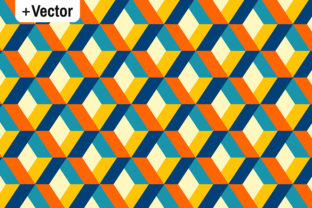
Shape choice matters. Triangles and hexagons tend to feel technical and organized. Circles and spheres introduce fluidity. Sharp angular forms evoke precision and innovation, while curved geometries feel organic and approachable. The best Geometrical Abstract 3D Pattern Design uses a restrained set of forms. Overcrowding with too many shape types leads to visual noise. A pattern composed solely of extruded rhombuses, repeated at consistent angles, can be far more impactful than one that tries to include every possible shape.
3. Dynamic Lighting and Material Behavior
Lighting transforms a pattern from a wireframe exercise into a tactile experience. Specular highlights, subtle gradients, and ambient occlusion give geometric forms weight. Matte finishes convey sophistication. Glossy or metallic surfaces add energy. Translucent materials allow for light transmission, creating beautiful interactions when patterns are overlaid on backgrounds. Many designers use emissive surfaces—where certain elements appear to glow—to guide the viewer's eye through the composition. When lighting is handled thoughtfully, Geometrical Abstract 3D Pattern Design can simulate real-world materiality even in completely abstract compositions.
4. Scale and Repeat Logic
How a pattern tiles or scales is critical. Some patterns are designed for single-screen hero sections, where the geometry occupies the entire viewport without repeating visibly. Others are built as seamless tiles for wallpaper, fabric, or packaging wrap. In repeatable Geometrical Abstract 3D Pattern Design, the edge matching must be flawless. Any visible seam breaks the illusion of continuous depth. Procedural tools often include offset and mirror functions to create seamless repeats automatically, but manual checking is always advisable.
Practical Applications Across Industries
Understanding where these patterns excel helps you decide when to deploy them.
- Web and UI design: Background hero sections, loading animations, hover state reveals, and scroll-triggered parallax. A subtle abstract 3D pattern adds texture without distracting from content. For example, a SaaS landing page might use a low-opacity Geometrical Abstract 3D Pattern Design as a backdrop behind call-to-action buttons. The depth draws the eye upward, creating a natural focal hierarchy.
- Motion graphics and video: 3D patterns offer built-in animation potential. Rotating the camera, shifting light sources, or morphing geometry creates rich visual content without traditional character or scene animation. Many explainer videos use Geometrical Abstract 3D Pattern Design to illustrate concepts like connectivity, data flow, or structural growth.
- Product design and packaging: Embossed or debossed geometric patterns on physical products add tactile dimension. Bottles, electronics, and luxury goods frequently feature repeating 3D geometric motifs that catch light differently from every angle. This is especially popular in premium product lines where perceived value is tied to surface finish.
- Architectural visualization: Floor patterns, facade treatments, and interior wall panels benefit from abstract 3D geometry. Unlike traditional architectural ornamentation, procedural Geometrical Abstract 3D Pattern Design can be customized instantly to fit a specific spatial context.
- Brand identity systems: Logos, icons, and brand marks increasingly incorporate 3D geometric abstraction. But beyond a single mark, the pattern becomes a flexible graphic asset that can be cropped, colored, and scaled across applications from business cards to billboards.
Choosing the Right Approach for Your Project
When considering Geometrical Abstract 3D Pattern Design, you need to evaluate both technical and conceptual factors.
Performance is paramount. For web-based applications, heavy 3D geometry can slow page loads. Optimizing polygon counts, using compressed textures, and exporting in formats like glTF or WebP helps. For real-time use, consider generating patterns via CSS, WebGL, or SVG with 3D transformations. These render natively in the browser and often require less bandwidth than rendered image assets. If you must use prerendered images, leverage responsive breakpoints so mobile devices receive lower-resolution versions of your Geometrical Abstract 3D Pattern Design.
Color strategy. Because 3D geometry already introduces complexity through depth and shadow, simpler palettes tend to work best. Monochromatic schemes allow the form to take center stage. Analogous color palettes create harmony. Complementary colors should be used sparingly—perhaps for a single highlight element. Avoid busy gradients that compete with the geometry. If your pattern uses metallic or glass-like materials, the reflections will already add color variation naturally.
Animation considerations. If your pattern moves, speed and easing matter. Slow, subtle animations feel premium. Fast or erratic motion feels chaotic. Use gentle rotations or slow camera pans. For interactive patterns, mouse-follow parallax or scroll-triggered depth shifts keep users engaged without overwhelming them. Always provide a reduced-motion alternative for accessibility compliance.
Contextual relevance. A pattern that works for a tech startup may feel cold for a wellness brand. Abstract geometric shapes can be softened with rounded forms, pastel colors, and organic lighting. Conversely, sharp, high-contrast Geometrical Abstract 3D Pattern Design reinforces messages about innovation, speed, and precision. Match the pattern's visual tone to your brand's emotional objectives.
Common Pitfalls and How to Avoid Them
Even experienced designers can stumble with 3D abstract patterns. Awareness of these issues helps maintain quality.
- Overcomplication: Adding too many different shapes, colors, and materials creates visual noise. A pattern should support your message, not obscure it. Restrict your palette to two or three shape types per composition. If you find yourself adding more, step back and simplify. Remember that in Geometrical Abstract 3D Pattern Design, restraint is often more impactful than complexity.
- Ignoring negative space: Dense patterns with no breathing room feel claustrophobic. Let the 3D forms float within a generous spatial field. This allows the depth cues to register more clearly. Negative space in 3D patterns functions like white space in typography—it gives the eye a place to rest.
- Inconsistent perspective: When elements within the same pattern use different vanishing points or camera angles, the result feels broken. Decide on a single perspective system—orthographic, isometric, or perspective—and apply it uniformly. For seamless tileable patterns, isometric projection is often the safest choice because it maintains consistent scale and depth across the repeat.
- Poor asset management: If you are generating patterns with procedural tools, document your node setup. Months later, needing to edit a pattern built inside a tangled node tree is frustrating. Use naming conventions and group structures. This hygiene saves time and makes your Geometrical Abstract 3D Pattern Design work reusable across projects.
Evaluating Tools and Workflows
Your choice of tool will shape your pattern's possibilities. Blender offers complete control with its geometry nodes system, ideal for procedural generation. Cinema 4D with Mograph excels at cloner-based patterns and is favored in motion design studios. Spline and Three.js are browser-native solutions that produce interactive 3D patterns. For static vector-like patterns with depth, Adobe Illustrator's 3D and Materials panel now offers extrusion and lighting controls.
Many professionals adopt a hybrid workflow: generate the base geometry in a dedicated 3D application, then export to a design tool for color grading, cropping, and compositing. This ensures that Geometrical Abstract 3D Pattern Design integrates smoothly into a pre-existing brand system. Whichever tool you choose, invest time in understanding its lighting engine. The difference between a flat and compelling pattern often comes down to highlight placement and shadow softness.
Testing across contexts is essential. A pattern that looks magnificent on a 5K monitor may appear muddy on a printed brochure. Always export test versions at final output dimensions. For digital use, check contrast ratios for accessibility. For print, verify that the depth effect translates without backlighting. Sometimes, a pattern designed for screen needs simplification when migrating to physical media.
Ultimately, Geometrical Abstract 3D Pattern Design is a discipline that rewards thoughtful iteration. Each project offers a chance to refine your use of space, form, and light. By approaching it with both creative curiosity and practical rigor, you can produce patterns that are not only visually arresting but also strategically effective across mediums.