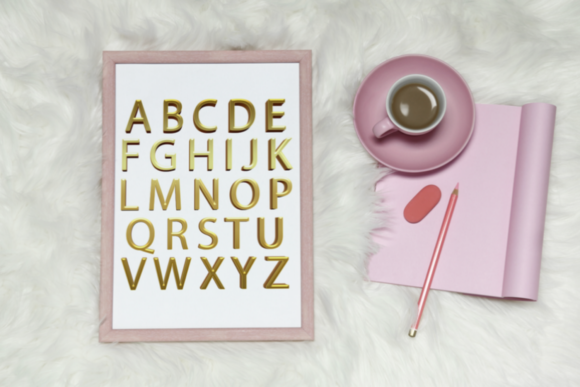
How Simple Gold Foil Alphabet and Gold Letters Elevate Everyday Projects
You have probably seen that warm, reflective gold text on a wedding invitation, a social media graphic, or a product label and wondered how something so simple can look so polished. The gold foil alphabet and gold letters available in straightforward digital formats have become a quiet workhorse for people who want a refined look without hiring a designer or investing in expensive printing. Whether you are a freelancer putting together a client proposal, a small business owner refreshing your packaging, or a hobbyist creating a birthday banner at home, these gold letter sets offer a practical shortcut to something that looks intentionally crafted.
The appeal is not just the color. It is the way the letters catch light in a digital space or mimic the embossed feel of real foil on a printed page. When you use a gold foil alphabet, you are borrowing a visual cue that signals care, luxury, or celebration. And because these assets come as individual letters or complete alphabets, you can mix, match, and scale them for almost any project without needing advanced design skills.
Where Gold Letters Fit Naturally Into Real Work
Gold letters and foil alphabets are not just for formal events. They appear in contexts where you want a focal point that stands out without screaming for attention. Think about a course creator who needs a compelling title slide for a video lesson. A bold gold letter set for the main heading can make the content feel more authoritative and polished, especially when the rest of the slide uses clean, neutral type. The same logic applies to a blogger creating a pinnable image for a post about luxury travel or high-end recipes. One gold word as the headline can change the entire mood of the graphic.
Small business owners often reach for gold foil alphabets when they need social media content that feels cohesive. A boutique clothing shop posting a sale announcement might use gold letters for the word “SALE” and then pair it with a simple sans-serif font for the details. The result looks designed, not thrown together. Similarly, a wedding photographer building a portfolio site might use gold letters sparingly for section headers, signaling elegance without overwhelming the images.
Even in more functional settings, gold letters serve a purpose. A freelance event planner preparing a mood board for a client can drop in gold foil text to represent signage, table names, or menu headers. This gives the client a tangible sense of the aesthetic before any physical materials are ordered. It saves time and avoids miscommunication.
Personal Projects That Benefit From a Gold Touch
Not every use case is commercial. Many people turn to gold foil alphabets for personal milestones. A parent designing a first birthday invitation might use gold letters for the child’s name, then pair it with a playful secondary font for the details. The gold adds a celebratory feel that feels special but not overly formal. The same person might reuse those same gold letters for a holiday card or a thank-you sign for a family gathering. Because digital gold letters can be resized and recolored slightly (if you are working with layered files), one set can serve multiple occasions across years.
Hobbyists who craft physical items also find value here. Someone making custom mugs, tote bags, or framed prints with a cutting machine or sublimation printer can upload gold letter files directly into their design software. The result is a product that looks store-bought but carries a personal message. A gold letter monogram on a handmade gift, for instance, elevates the object from a simple craft to something someone might actually display.
Who Gets the Most Out of Simple Gold Foil Alphabets
Different users interact with gold letters in different ways, and understanding those patterns can help you decide whether a particular set fits your workflow.
- Digital creators and content marketers often use gold foil alphabets for thumbnail text, YouTube channel headers, and Instagram story highlights. The reflective quality of the letters catches the eye in a crowded feed, and because the files are typically PNGs with transparent backgrounds, they layer cleanly over photos or gradient backgrounds.
- Educators and course builders use gold letters sparingly to mark module titles or key concepts. In an online learning environment, visual hierarchy matters. A gold heading tells the student, “This section matters,” without requiring a separate graphic for every point.
- Publishers and self-published authors sometimes use gold foil alphabets for book covers, chapter titles, or promotional quote cards. A nonfiction author writing about leadership or personal growth might place a single gold word on the cover to convey authority and premium positioning.
- Small business owners in retail or hospitality use gold letters for menu boards, signage templates, and product labels. A candle maker, for instance, could use gold foil text for scent names on labels. A coffee shop might use it for a chalkboard-style specials sign that needs to feel warm but upscale.
Scenarios Where Gold Letters Solve a Specific Problem
Consider a freelance social media manager handling accounts for multiple clients. One client owns a skincare line, another runs a high-end pet accessories shop, and a third is a wedding venue. Instead of buying different font packs for each brand, the manager can use one versatile gold foil alphabet and adjust the surrounding design elements to match each brand’s identity. The gold letters become a consistent visual tool that adapts to different color palettes and moods. This reduces the time spent hunting for new assets and keeps the workflow streamlined.
Another scenario involves a non-designer who needs to produce a one-time event flyer. Maybe a community group is hosting a fundraising gala, and the person in charge has never touched design software. A simple gold foil alphabet file that includes uppercase letters, numbers, and basic punctuation allows them to type out “GALA 2025” in a striking way. They can drop the letters into Canva, PowerPoint, or even a basic image editor, arrange them manually, and export a flyer that looks deliberate and professional.
What to Consider Before Choosing a Gold Foil Alphabet
Not every gold foil alphabet is created equal, and the differences matter depending on your end use. Pay attention to the file format. PNG files with transparent backgrounds are ideal for digital use, while SVG or DXF files work better for cutting machines. Some alphabets include only uppercase letters, which is fine for short headings but limiting if you need lowercase for a more natural look. Check whether numbers, punctuation, and common symbols are included. There is nothing more frustrating than designing a beautiful title only to realize the set lacks the ampersand or the number you need.
Consider the style of the gold effect itself. Some alphabets have a highly reflective, almost metallic sheen with visible light gradients. Others are more matte or textured. If you are printing on a matte paper stock, a highly reflective digital gold might look slightly different on paper than it does on screen. If you are working entirely digitally, the reflective version usually reads well because screen brightness enhances the shine. For physical prints, a slightly subdued gold might look more realistic.
Resolution is another factor. A gold letter that looks crisp on a phone screen might appear pixelated when scaled up for a poster. Look for sets described as high resolution, ideally 300 DPI or higher, especially if you plan to print at large sizes. Vector formats like SVG offer infinite scalability, which is a major advantage if you anticipate using the letters across formats and sizes.
Practical Workflow Tips for Getting the Most Out of Gold Letters
If you are new to using gold foil alphabets, start with one project at a time. Open your design software, place a dark or neutral background, and drop in your chosen letters one by one. Position them manually, adjust spacing by eye, and experiment with scale. Gold letters tend to look best when they have breathing room around them. Crowding them with other design elements can dilute the impact.
Layering is a powerful technique. If your gold alphabet file includes separate layers for the foil highlight and the shadow, you can adjust the shadow intensity to match your background. On a light background, a softer shadow works. On a dark background, you might increase the opacity to create a stronger contrast. Some users also duplicate the gold letter layer, apply a slight blur to the duplicate, and use it as a glow effect. That extra step can make the letters feel more dimensional, especially in digital presentations.
If you are using the letters for a physical product, test a small print first. Gold effects that look brilliant on screen can sometimes print dull or muddy depending on the printer and paper type. Print one letter at full size, check the color, and adjust your file’s saturation or brightness if needed. Calibration between screen and print is rarely perfect, so a test run saves waste and disappointment.
Why Simple Gold Foil Alphabets Remain a Reliable Choice
There are many decorative font styles available, but gold foil alphabets hold a specific place in the toolkit of creators and entrepreneurs. They are not trying to replace standard fonts. Instead, they serve as accent elements that bring attention to key words, names, or numbers. They work because they are familiar. People associate gold with quality, celebration, and care. When you use a gold foil alphabet appropriately, you are tapping into that association without overstating it.
The best results come from restraint. One gold word on a page reads as intentional. Ten gold words compete for attention and lose the effect. Think of gold letters as the visual equivalent of a raised toast. You do not need to raise your glass at every sentence. You do it at the moment that matters. The same logic applies to your design. Choose the word or phrase that deserves the spotlight, and let the gold letters do the work.